Website Redesign — Discovery Questions
We've reviewed both current sites in full and researched 15+ competitor and peer sites in the KYC and identity verification space. These questions are to make sure the design is grounded in how you see the business.
Answer in whatever format is natural. Skip anything you're not sure about. Where you disagree with each other, note it — disagreements are often the most useful input. There are no wrong answers.
· Documents & Resources
This is a guide only — not a mandatory checklist. If you have any of these, please share. If you don't have some or any of them, that's completely fine.
| # | Item | Why it helps |
|---|---|---|
| 1 | Logo files — SVG or AI/EPS, all variants | Base of everything |
| 2 | Brand guide / style guide — colours, fonts, logo rules, tone | Even rough/informal is useful |
| 3 | Pitch deck or sales deck | Clearest product summary we can get |
| 4 | Product screenshots — Streamline dashboard, Flex UI | Feature sections, showcase |
| 5 | Screen recordings or demo videos (if any exist) | Product showcase section |
| 6 | Case studies — full versions, even if we publish anonymised | Real numbers and story |
| 7 | Customer logos — any that have given permission | Social proof |
| 8 | Pricing structure — internal only, to inform presentation | Not publishing it — just need to understand the model |
| 9 | Team photos — current, reasonably high-res | About section |
| 10 | Organogram or org chart — even an informal one | Helps decide what to show and how to structure the team section |
| 11 | Fliers, brochures, one-pagers shared with clients | Messaging reference |
| 12 | Press coverage links or PDFs | If any exists |
| 13 | Google Analytics access or export | Preserve SEO — don't break what's working |
If there are other documents describing the products — internal docs, proposals, integration guides, onboarding materials — share those too.
1 Why this, and what success looks like
Start here. These answers shape everything.
Question 1
What is not working about the current website? What specifically frustrates you when you send a prospect or client to it?
Question 2
Who is the site failing most right now — the bank or enterprise lead, the developer or startup looking for Streamline Flex, or someone else?
Question 3
What would make this project a clear success six months after launch?
Be as concrete as you can — more demo bookings, more Flex sign-ups, better first impressions in sales meetings, something else?
Question 4
Is there a competitor or peer site you benchmark yourselves against?
Not that you want to copy it — just one you look at and think "that's closer to what we want."
2 The two products
What we understand about Streamline: The enterprise KYC/KYB platform for banks, microfinances, and larger financial institutions. Integrates via API. Covers KYC for individuals (NIRA, facial, AML/PEP), KYB for businesses (URSB, KCCA, TIN, shareholder verification), and digital onboarding across web, mobile, WhatsApp, USSD, in-branch, agency banking.
What we understand about Streamline Flex: Self-serve, pay-per-use. No contract, no integration needed to start. Sign up, buy credits, verify. Live at flex.streamline.laboremus.ug. For individuals, startups, developers, smaller teams — including people who may not know the term "KYC" but need to verify an identity.
What we understand about Streamline Flex: Self-serve, pay-per-use. No contract, no integration needed to start. Sign up, buy credits, verify. Live at flex.streamline.laboremus.ug. For individuals, startups, developers, smaller teams — including people who may not know the term "KYC" but need to verify an identity.
Question 5
What is wrong or incomplete in what we've described above? What are we missing?
Question 6
What does Streamline do that competitors don't, or don't do as well? What do you lead with when a bank asks "why you?"
From our research: Smile Identity covers more countries but is less deep per country. Your integrations with NIRA, URSB, KCCA are a specific moat. Is that how you frame it?
Question 7
What does Streamline Flex do that competitors don't? What's the strongest reason a small team or developer should choose it?
Question 8
What are the most common objections from enterprise prospects — the things that slow down or kill deals?
Question 9
Pricing — Streamline enterprise: how does it work?
Flat fee, per-verification, per-institution size, custom? We won't publish it, but we need to understand the model to decide how to present it on the site.
Question 10
Pricing — Streamline Flex: walk us through the credit model.
How much does a verification cost? Is there a free tier or trial? What can you do with one credit?
3 The two user journeys
This is the core of the site's architecture. We need to understand each audience specifically enough to design their path through the site. Discoverability matters — how do people find you first, and does the site speak to them immediately when they land?
Enterprise client (Streamline)
Question 11
Describe this person precisely. Job title? What does their day look like? What specific problem are they trying to solve?
Question 12
How do enterprise leads typically discover Laboremus — referral, search, events, outbound? Does the website play a role, or does it come later?
Question 13
What does the buying process look like — how many people involved, how long does it take, what are the key stages?
Question 14
What should the ideal path through the new site look like for an enterprise lead? What should they see, what should convince them, what should they do next?
Streamline Flex client
Question 15
Describe this person. What are they building or trying to do? Developer, founder, compliance person, someone doing a one-off check?
Question 16
Some Flex users may not know what KYC is — they just need to verify an identity. How do you explain the product to someone like that? What language works?
Question 17
How do Flex users find the product — word of mouth, the main site, search, social?
Question 18
What is the ideal path for a Flex user on the new site — how quickly should they get to "sign up and start verifying"?
Question 19
Are there Flex use cases the current site doesn't address? Things people use it for that might surprise someone?
Both audiences
Question 20
Are there audiences you're not currently reaching that you want the new site to go after?
Examples from the market: insurance companies, SACCOs, credit bureaus, telcos, mobile money operators, developers building via API, government procurement.
Question 21
Does the site need to speak to clients outside Uganda?
4 Case studies & proof
Question 22
Are there more case studies that haven't been published yet — other institutions with strong outcome numbers?
Question 23
The published stats: 40+ financial institutions, 2M+ identities verified, 200K+ accounts, 1000+ users — are these current, or do we need to update them?
Question 24
Testimonials — are there any additional ones we could add? Or any existing ones we could attribute to named companies?
5 Design direction
Question 25
You mentioned wanting to stand out from the usual minimalist fintech SaaS look. What does "different" mean for you? How should someone feel when they land on the site?
Question 26
Sites you like — what specifically works about each?
Four we've shortlisted as worth discussing. Click any to open.
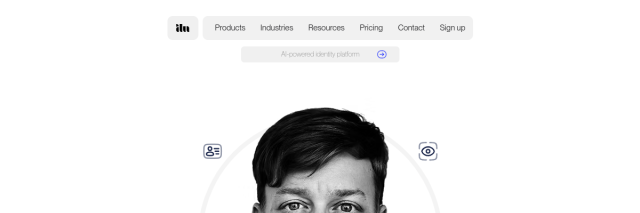
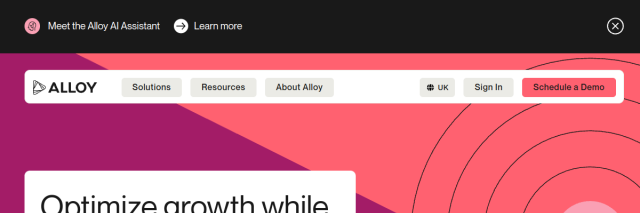
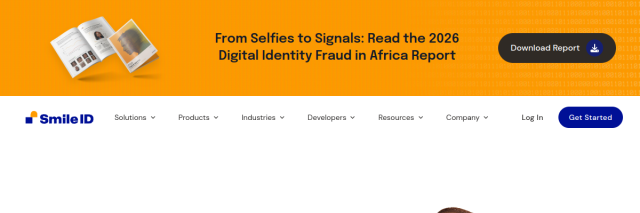
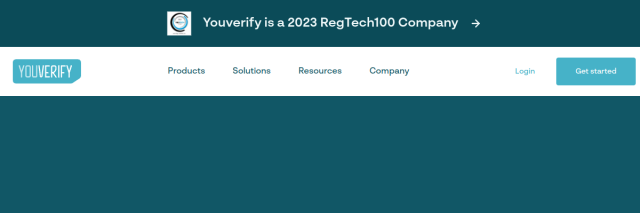
Question 27
Sites you don't like — what feels wrong for what you're building? What specifically bothers you?
Question 28
Pick words that feel closest to the brand personality:
Question 29
Should the site feel explicitly local, or more internationally generic?
Every Africa-focused competitor looks like it was built in San Francisco. Owning a distinctive local visual identity is a real differentiator — but it's your call.
Question 30
What should the site not look like? Any aesthetics, colours, styles, or patterns to avoid?
Question 31
Do you have an existing brand guide — documented colours, fonts, logo rules, tone of voice? Or is the current brand informal and undocumented?
6 Technical & infrastructure
Question 32
Domain: we're using laboremus.ug as the primary domain. Should streamline.ug stay active as an alternate, or does it serve a different purpose going forward?
Question 33
The tech direction is a static site on Azure. Does the team have a preference on hosting and deployment, or is that the dev team's call?
Question 34
Content management: do you want a lightweight CMS built in from the start, so the blog or team page can be updated without touching code?
Something like Decap CMS or TinaCMS can sit on top of the same static setup with minimal overhead.
Question 35
Is there existing Google Analytics or other tracking we should carry over, to preserve historical data continuity?
7 Visualizing product use
Question 36
How would you describe, in your own words, what it's like to use Streamline or Streamline Flex day-to-day?
We need language grounded in the actual experience of using the product — not marketing copy.
Question 37
Demos vs illustrations — instead of asking visitors to "book a demo," should we show what the product does through interactive illustrations or animations (like idnorm.com)? What do you think would work better?
Question 38
Are there existing illustrations, visual concepts, or a design language we could adapt to communicate the platform's value — the verification flow, the data sources, the output?
8 Site structure
Our proposed top-level content tree:
- / Homepage — routes enterprise and Flex audiences
- /streamline Enterprise product page (KYC, KYB, onboarding, API)
- /streamline-flex Self-serve product page (what it is, pricing, sign up)
- /customers Case studies, logos, testimonials
- /about Company, team, mission
- /blog Existing articles migrated
- /contact Booking + contact form
Question 39
Does this top-level structure feel right? What pages, sections, or content areas are missing? would lower levels work
Question 40
Products vs Solutions: are we keeping products on the homepage and solutions elsewhere? Should KYC, KYB, and onboarding detail pages remain as separate URLs, or fold into the Streamline product page?
9 About page & team
The current About page is a team grid with a CEO quote — our notes flag it as too thin. The new site needs a real company story. This section is about what that looks like.
Question 44
We have the current About page content as a starting point. What's missing from it, or what no longer reflects where the company is today?
Is the company description still accurate? Is there a milestone, shift in direction, or part of the story the current page doesn't tell?
Question 45
The current site lists old staff members. what changes will we be making?
And: who should appear on the new About page? The full team, or leadership only? This affects both the design and the photography needs.
Question 46
Team photos — the current site has headshots from roughly mid-2023 on the Webflow CMS. Are these still current and usable for the new site, or do we need new photography?
If new photos are needed: what style works for the brand — formal portraits, candid office/workplace shots, something else? Would this be studio or on-site?
Question 47
How much depth should team profiles have? And should any team members link out to an individual page, their LinkedIn, or elsewhere?
Options range from name + title + photo only, to a short bio (2–3 sentences), to individual team member pages. What feels right for Laboremus?
Question 48
Is the org structure worth communicating on the site — even informally — or should the team section stay purely human (faces and names, no hierarchy implied)?
Some companies show a visual organogram. Others just list everyone flat. Some show only leadership and leave the rest out entirely. What's right here?
Question 49
Partners, relationships, and credibility signals — the current site mentions Bank of Uganda and Uganda Bankers Association. What is the nature of those relationships? Can they be named more specifically, or displayed as partner logos?
Are there investors, funders, or notable advisors the site should mention? Any accelerators, programmes, or government relationships?
Question 50
Careers — our proposed footer structure includes a Careers link. Is hiring an active priority right now, or should this be left out for now?
Could be as simple as a "we're hiring" line with a contact email, or a full jobs page if there are open roles to list.
10 Anything else
Question 41
sende* — is this still an active product being sold and maintained? Should it appear on the new site?
Question 42
Are there any other products, features, or initiatives in development that need to be represented on the new site, even briefly?
Question 43
Is there anything we haven't asked about that you think is important before we start designing?